

Compost | July
Fireweed, permission slips,and herring gull appreciation, plus some flash memoir pieces inspired by my family history and Durham Miners Gala.

Episode 7 of my monthly compost posts: a round up of life currently, some short pieces of life writing, my bird of the month, and a tarot card or reading for the month.
Seeds and Sparks
July always feels like fire season to me. All along the river valley I live in, the fields and hillsides are tipping from lush, fresh green into sun-bleached, brittle yellows and golds. Every patch of uncultivated land along the paths and roadsides is awash with the vivid pinks of rosebay willowherb, also known as fireweed. It’s been a hot summer so far, intercut with intense bursts of heavy, thundery rain falling on hard, parched soil. The heat has been oppressive at times, a wall of humidity surrounding my body when I step outside the house, usually hurrying to deposit or collect a child from school, and within minutes I’m coated with a thin layer of sweat, sticky and uncomfortable.
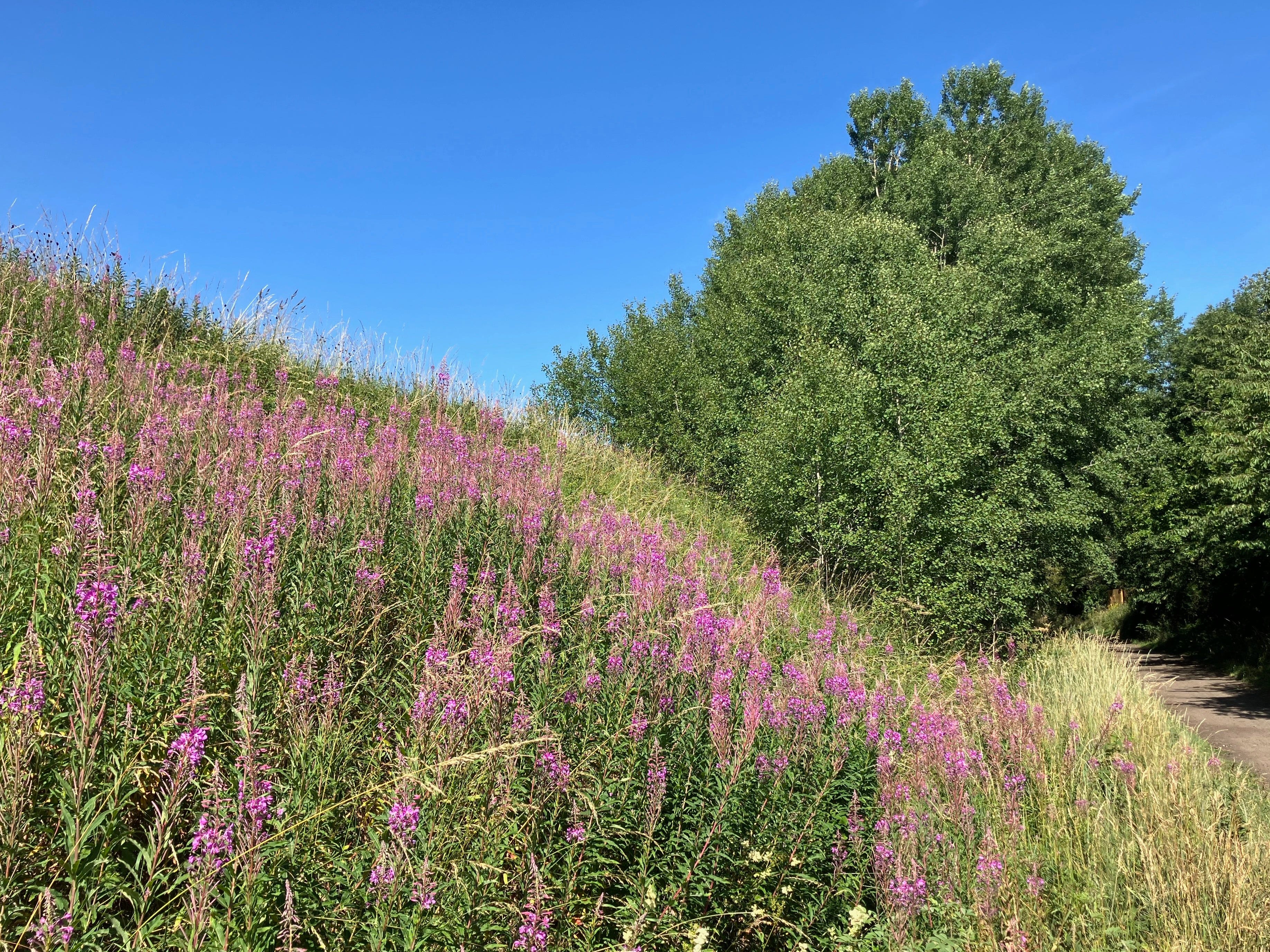
But at the same time, everything feels easier when it’s hot, simpler somehow. I can leave the house in a t-shirt, shorts and sandals, no need to check the forecast and add layers of warm clothing or pack a waterproof, just in case. I find that ideas spark and catch alight quickly, my mind moving quick as a flame, words flickering as they move from my fingers to the page.
For all these reasons, I’ve chosen the Ace of Wands as this month’s tarot card.
The suit of Wands is associated with fire. It’s all about action and creativity, passion and new beginnings. The Ace of Wands is a seed, a spark, that new idea that grabs you and tells you to go for it. Try it out, have a go, say yes! It’s the start of a project, when everything feels exciting and you’re keen to dive in. It’s that moment part way through a project when something you’ve been struggling with suddenly clicks, and you realise what the next step should be, or find a new way to approach the problem.
Fire is both creation and destruction. The Ace of Wands can represent clearing out the old to make way for something new. Maybe it’s a time of upheaval, everything in your home, your work, your life thrown into chaos and confusion. It might be unsettling, an uncomfortable process to live through, but the Ace of Wands is a reminder that everything changes, that embracing the chaos and accepting the inevitability of change can lead you to new ideas and fresh perspectives.
Bird of the Month: Herring Gull
Larus argentatus, Gwylan y penwaig
I love herring gulls. They are perhaps not an obvious choice, but they’re one of my favourite birds. I love how they know exactly what they want and go after it - that sausage roll in your hand, the sandwich still in its packet they can see through the automatic sliding door of the Co-Op. Their raucous cries as they swoop and glide overhead were the lullaby of my childhood, particularly on hot summer nights when it remained daylight until long after I was in bed. I live almost an hour’s drive away from the coast now, and mostly its black headed gulls I see in the local area, following behind a tractor as it moves slowly up and down a field. But sometimes, I hear herring gulls calling above the house and for a moment I’m transported back to my childhood home on the North Wales coast.
I love the way herring gulls care for their young, and that helpful red spot on their bright yellow beaks that shows the chicken where to tap when they want to request their next meal. I love how the chicks grow to full-size within their first year but still remain children - the sight of a juvenile herring gull, grey plumage and black beak, peeping and bobbing its head like a chick as it begs its parents for food always makes me smile. The adult birds skitter away from their child, turn their backs: “you’re too big, get your own tea, stop trying to tap on my break - this kitchen is closed!”
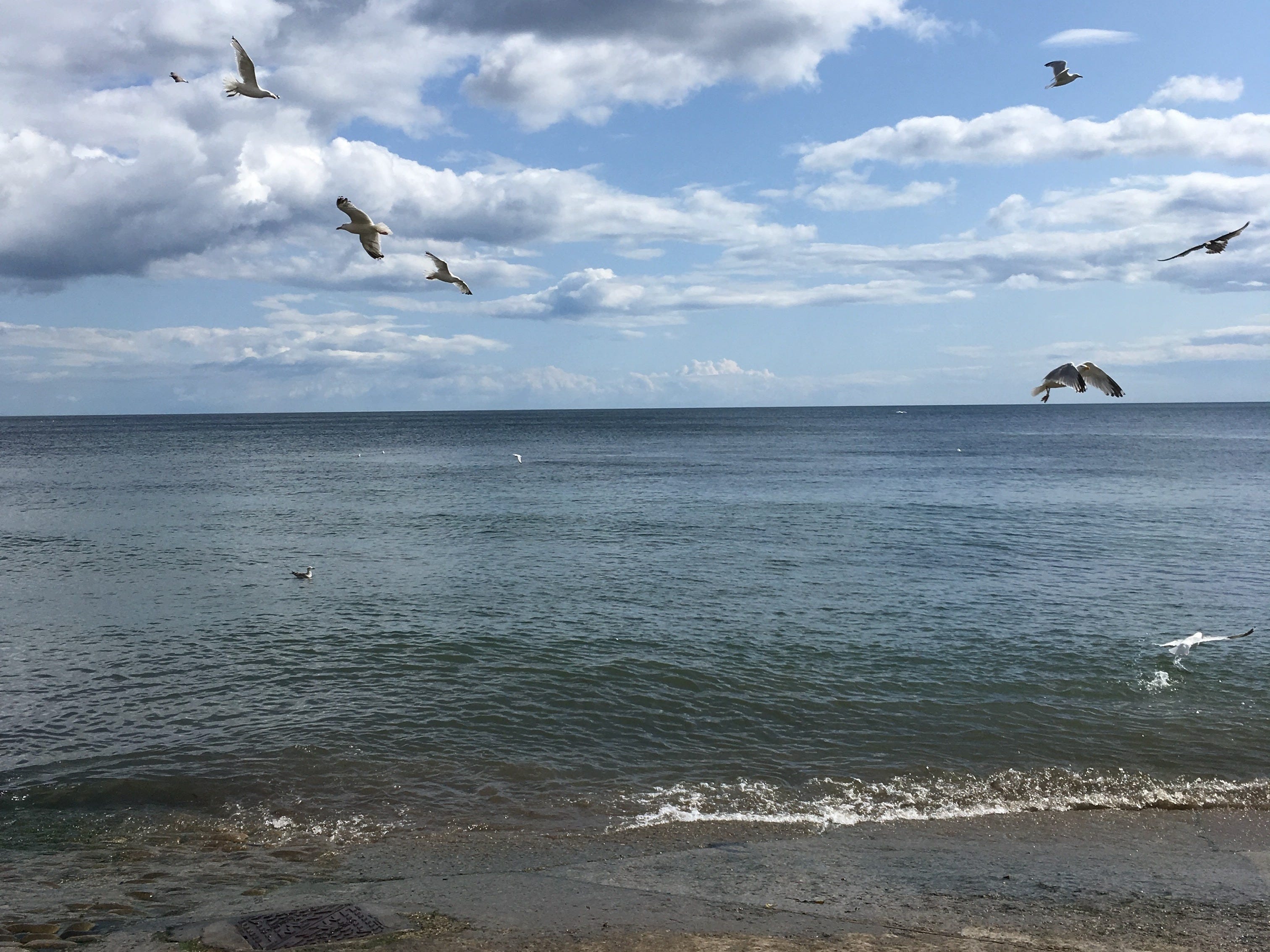
I love the heavy beat of their wings when they’re taking off, lumbering into the air like a jumbo jet. I love the patterns they make in the sky, riding the thermals out over the sea and looking for all the world as if they’re flying for the sheer joy of it. As children on the beach, my brother and I used to race towards flocks of herring gulls standing on the shoreline, making them scatter into the air as we yelled out “see-gu-ulls!” at the top of our lungs. The sense of power I felt in being able to make them all fly up, to watch them wheeling high above me when moments ago they had been at my feet. I watch my children do something similar now with rock pigeons on inland urban streets. I think about the different patterns pigeons and gulls make when they scatter, and how that might change and shape our shared experience of making birds take flight.
The Big Meeting
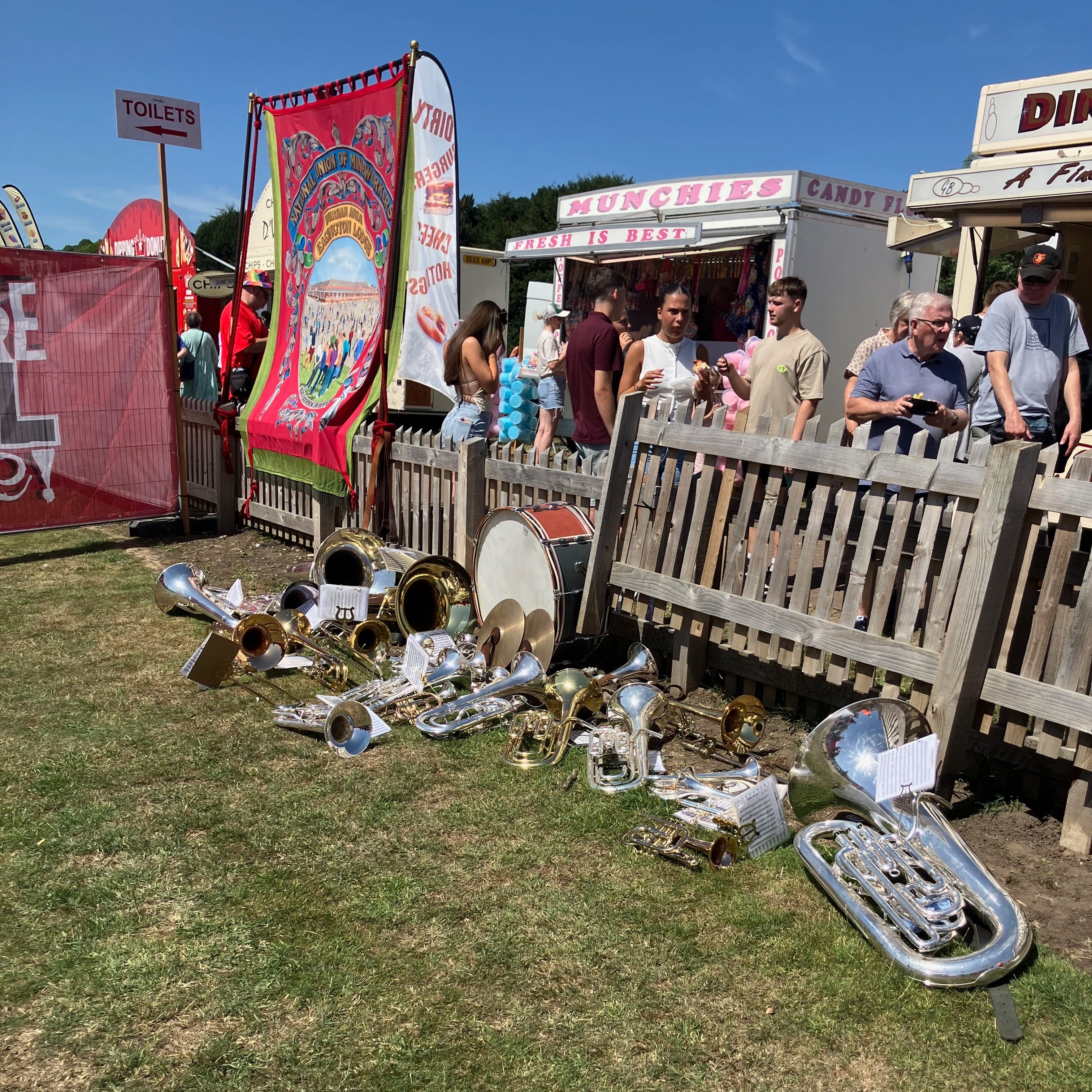
Yesterday me and the kids went to Durham Miners Gala, otherwise known as the Big Meeting (I tend to agonise over whether to pronounce it ‘garla’ or ‘gayla’, so am very grateful for this alternative name). My other half was there too, but busy doing his day job as a freelance cameraman and helping to document the event. The Big Meeting is both political gathering and carnival, a day when the people of the now ex-mining communities of County Durham takeover the city. There are banners and brass bands and political speeches and a funfair and food stalls. It’s organised by Durham Miners Association (the DMA), who describe the event as “the world's greatest celebration of trade union values, community spirit, and working class life”. It’s regularly attended by over 100,000 people, come rain or shine, even 30+ years since the last coal mine in County Durham closed.
“Since 1871, the Gala has given a voice to the oppressed throughout the world. It has expressed the vital importance of trade unionism, the duty to look after each other in the community and the desire to build a society where wealth is created for the common good. Above all, the Gala commemorates the past, as part of a living movement, which desires to build a better future for all.”
My husband grew up in a former pit village just outside Durham City and has been coming to the Miners Gala since he was a child. I’ve been going with him for over a decade now, since the summer after we moved in together. These days, he’s out filming the event from the very early morning, and every year I haver over whether to go too. I worry about being the only adult in charge of my increasingly independent children, about losing the smallest in the crowds because he refuses to hold my hand, or the eldest having a teenage moment and storming off. We struggle to compromise. They want to go on every ride in the funfair, eat as many burgers and doughnuts as they can, and spend all their money on plastic tat. I want to see the banners and listen to the brass bands as they slowly make their way through the city towards the Racecourse, then listen to the speeches on the platform - this year the line up includes Jeremy Corbyn and the Palestinian ambassador to the UK, Husam Zomlot.
In this month’s Compost post, I decided to share some (very) short pieces of flash memoir based on my experiences of Big Meetings past and present. Each piece is around 400 words and written in 30-40 minutes or so. They are first draft, unedited slices of life, and it feels a little vulnerable to share such unpolished writing but this space is for writing aloud so writing in any format is allowed . Let’s give it a go.
Flash memoir seems to be having a bit of a moment on Substack this summer: I’m taking part in Lindsay Johnstone’s six week experiment in collaborative life writing The Chain, Dr Lily Dunn is running a flash memoir competition this month (theme: transformation, deadline: 28 July), and I’m very intrigued by Jude Jones (they/them)‘s tiny memoir project.


There’s also been some fascinating discussions about privilege and working class voices in memoir and nature/landscape writing in the wake of The Salt Path scandal last weekend - I agree with all the points Wendy Pratt makes in the Note I’ve linked to below:
The Miners Gala is very explicitly a celebration of working class life, as well as a kind of living memorial for a kind of working class community that is being lost. I don’t feel able to claim any kind of working class identity, despite both my parents being born working class, but I do have a definite family connection to coal mining: my paternal grandad and both great-grandfathers were miners in south east Kent and Lancashire. Given all of the above, I thought it might be interesting to explore some of these themes through some short snapshots of life writing about the Big Meeting.
2012
Our newborn son is strapped snuggly against M’s chest in the Ergo baby carrier. I am both bereft and liberated, my arms empty for what feels like the first time since he was born. My breasts ache, already full of milk again, but the baby is quiet, lulled to sleep by our steady pace as we seek out the least crowded route to the Gala. We arrive deliberately late, after most of the banners and bands have already made their way through the city to the Racecourse. It’s exciting and terrifying to be in amongst so many people in our brand new identities as parents.
We meet up with friends who’ve saved us space on a picnic blanket in a quieter corner of the field, and settle down to watch the world go by. Gaggles of teenagers showing off to each other. Sunshine bouncing on the smooth shiny curve of a tuba. A serious young man handing out copies of the Morning Star. A banner streaming out overhead suddenly as a gust of wind catches it, jewel colours snapping against the blue sky. The smell of frying onions making my mouth water. A swirl of noise from the fairground on the hill behind the Racecourse, happy hard core and screams of laughter. It’s a holiday.
I’m hoping to hear the speeches, but the baby has other ideas. Just as they announce the first speaker he starts to gently headbutt M’s chest, his kitten mouth searching for a nipple, and making small disgruntled noises that I know will all too soon turn into fire alarm yowls of rage. My milk lets down in a rush and we move fast, me snatching up the baby while M grabs the backpack. We retreat to the next field, sitting on a grassy slope over the river in relative solitude for my first al fresco breastfeed. In a few months I’ll be an old hand, not batting an eyelid at feeding him in a crowded cafe or waiting at a bus stop. But for now, I want a little privacy. We miss all the speeches but I don’t care, cocooned in the sunshine carnival atmosphere with my husband and our baby son.
2017
It must be fate that the year Dad comes to visit us over Gala weekend is the year we spot a Kent NUM banner on the field. But Dad himself is nowhere to be seen: at nearly 70, the hot sun and hours on his feet has tired him out and he’s retreated to the beer tent. M, braver than me, makes conversation with a man standing next to the banner, then he’s calling me over and introducing me. The man is from Aylesham, the village Dad grew up in, remembers my grandparents, went to junior school with Dad. He says he was a miner for twenty years and it’s like a glimpse into the life Dad could have led if he hadn’t passed the 11+ and gone to grammar school. We make slightly awkward small talk for a little, and I promise to bring Dad over to the banner later.
I feel unsettled by this unexpected link between Dad’s past and my present, his childhood in Kent and the new home I’ve made for myself in the North East. The man spoke about a world I know from Dad’s stories, a community I feel a connection to but at the same time know I don’t belong. When we finally find Dad I wonder if he feels something similar, because he’s reluctant to go back onto the field to look for the man. He wants to get another a beer instead, regale us with stories I know almost word for word now, about his childhood, his family, his friends. I wonder if he feels the same sense of dislocation from place and people as I am, but even stronger. Sometimes I think that the path his life took weighs heavy on him, the mid-twentieth century social mobility offered to academically minded working class children dividing him from himself.
I remember visiting the National Mining Museum in Yorkshire with my parents a few years previously. Turning a corner, I’d come face to face with an enlargement of a photograph I recognised, one that Dad kept in a folder of old family photos. Black and white, a crowd of men in flat caps, jackets and heavy boots clustered around a wagon piled high with coal. The typed letters at the bottom of the photograph read ‘The first hoppit of coal raised at Snowdown Colliery, November 19, 1912’. The shock of recognition as I looked at my great-grandfathers’s faces staring out at me, almost life-size.
2025
Tuesday. I’m at the cathedral, helping out at the university graduation ceremonies. I love the opportunity to spend a day in the cathedral, escaping to a quiet corner of the cloisters in between ceremonies to breathe in the deep sense of peace I always seem to find in medieval churches. There are glimpses of it too when I’m in the nave, directing parents of graduating students to their seats or explaining how to find the toilets. The massive carved pillars soar skywards, impossibly high, but keep me firmly rooted to the earth as well, the well-worn limestone flagstones smooth beneath my feet. I’m not religious but I feel like I could have made a good nun if I’d lived in the Middle Ages.
During term time, Durham can feel like a city slowly being swallowed by its university. Whole streets are 90% student housing now, lying empty over the long summer break. The local papers full of disgruntled letters pointing out that students don’t pay council tax, don’t contribute to the local community, that locals are being forced out by landlords looking to make a quick buck on sky high student rents. And the students are predominantly outsiders, many coming from private schools in the south of England to spend three years in the quaint, Harry Potter theme park that the city can find itself billed as. I play a strange form of bingo when I help out at graduation, seeking out the people who don’t fit that stereotype: a Geordie accent here, a Scouse voice there, something indefinable in the way people hold themselves that says hippy, left wing, working class.
Saturday. Graduation is over and the students are gone. Today the city belongs to the mining communities of County Durham, to the children and grandchildren of miners, to banners and bands celebrating trade unions from all over Britain. We try to spot banners from villages we know: Esh Winning, Bearpark, Seaham, Craghead. I clap and sing along as the bands pause outside the Royal County Hotel to perform their party pieces: Sweet Caroline, YMCA, Dancing Queen. I’m embarrassing my children but I don’t care. Soon, I’ll let them gorge on fresh doughnuts and candyfloss and they’ll forgive me. We’ll listen to the start of the speeches before they get bored, pull me away to the funfair: hook-a-duck, the waltzers, the gallopers.
Reading this on the train to Newcastle, Ellen, heading across the border and towards Northumberland and your words have my heart pulling at the north-east even more than usual. Love these quick flashes of memoir (which feel very polished to me), and the link of “kitten mouth” to candyfloss, the names of villages and those imagined ones of graduating students, the description of joyful peaceful protest against hard things x
Had a very pleasant week in Durham last autumn. Particularly enjoyed the University Botanical Garden and I was also impressed and moved by the Cuddy statue in the shopping centre near the Premier Inn. It's an interesting place with very friendly people. Parking, however, is an utter nightmare.